Connecticut cold has a way of exposing weak spots in a heating system. When temperatures fall into the teens around Lake Beseck or wind pushes across Powder Ridge, a gas furnace in Middlefield works longer and harder. That shift changes how it starts, burns fuel, moves air, and vents exhaust. Understanding these cold-weather effects helps a homeowner protect the system, lower gas bills, and avoid emergency outages.
Direct Home Services serves Middlefield, Rockfall, and the wider Coginchaug Valley with gas furnace services built for New England winters. The team installs and maintains natural gas and propane systems that hold steady when weather gets severe, and responds quickly when a furnace fails at the worst time.
Why cold weather strains a furnace in Middlefield
A furnace is sized for a design temperature point. In Middlesex County, that design point is typically near 5°F. On nights that dip toward zero, the heat loss from a home rises faster than a standard single-stage unit can keep up without long run times. Long run times and frequent cycles change the stress on key components such as the ignitor, draft inducer motor, blower fan, and limit switch. If the home has older windows or duct leakage, the strain is even higher.
Home layout affects comfort during cold snaps. Rooms over garages in Jackson Hill, or north-facing additions in Reeds Gap, often feel cooler. Long duct runs feeding those rooms lose heat when attic or basement temperatures drop. As a result, homeowners report uneven heating, short cycling, higher utility bills, or a furnace that keeps running but never feels comfortable.
Combustion challenges in extreme cold
A gas furnace needs the right air-fuel mix to burn cleanly. Very cold outdoor air is dry and dense. That density increases the air pulled through the burner assembly and across the heat exchanger, changing flame characteristics. If the draft inducer motor is weak or the vent pipe has partial frost blockage, the furnace can struggle to establish proper draft. That shows up as a yellow pilot light, delayed ignition, or repeated ignition lockouts.
Condensing furnaces (90%+ AFUE) produce water during normal operation. In harsh cold, that condensate can freeze in exterior drains or at the vent terminal. A shallow pitch in the condensate line or an uninsulated section near an outside wall can create an ice plug. The furnace then shuts down on a pressure switch or limit fault. Technicians often see this pattern after a sudden cold snap around the Coginchaug River area, where wind chill accelerates frosting on vent terminations.
Anecdote from service calls near Lyman Orchards: after a 12°F night, three homes with sidewall vents experienced the same fault code related to pressure switch failure. In each case, the vent termination had a thin ridge of ice. Clearing the ice and adding a small termination hood solved it, but the root cause was condensate freezing and wind-driven recirculation.
Airflow, filtration, and comfort in dry winter air
Cold air is dry, and indoor humidity drops as the furnace runs more often. Dry air feels cooler at the same temperature setting. Homeowners turn the thermostat up a degree or two, which increases run time. This loop can expose an undersized return, a dirty air filter, or a tired blower motor.
A clogged air filter is the simplest cause of short cycling. The furnace overheats due to low airflow, trips the limit switch, cools, and restarts. This is common during the first deep freeze in Middlefield because filters that seemed “okay” in fall suddenly become restriction points. Upgrading to a MERV 11 or MERV 13 filter with adequate surface area helps, but the cabinet must fit the deeper media to avoid pressure drop that starves the blower.
In older Rockfall colonials, 1-inch return filters and long jerky duct paths limit airflow during heavy demand. A two-stage or modulating furnace can ease the peaks because it runs longer at lower fire, which stabilizes temperatures in rooms at the end of the duct runs. Still, duct sealing and return upgrades often offer the best gain per dollar.
Fuel type and efficiency in Connecticut winters
Natural gas furnaces dominate in Middlefield neighborhoods served by gas mains, while propane (LP) furnaces are common around Lake Beseck and rural sections toward Durham. Fuel properties affect cold-weather behavior. Propane vaporizes poorly in very low temperatures if the tank is undersized or low on fuel. That can mimic a gas valve problem or cause flame instability. Keeping tanks above 30% in January and placing them where wind is reduced can prevent pressure issues.
High-efficiency condensing furnaces with AFUE above 95% reclaim more heat from exhaust, which lowers flue gas temperature. That boosts savings during long heating seasons, but it also means the vent pipe and drain must be protected from freezing. Proper slope for the vent and a heated or conditioned route for the condensate line are priorities during installation. Direct Home Services designs vent runs with short exterior exposure and checks the draft inducer motor performance to keep the pressure switch within spec even during extreme cold.
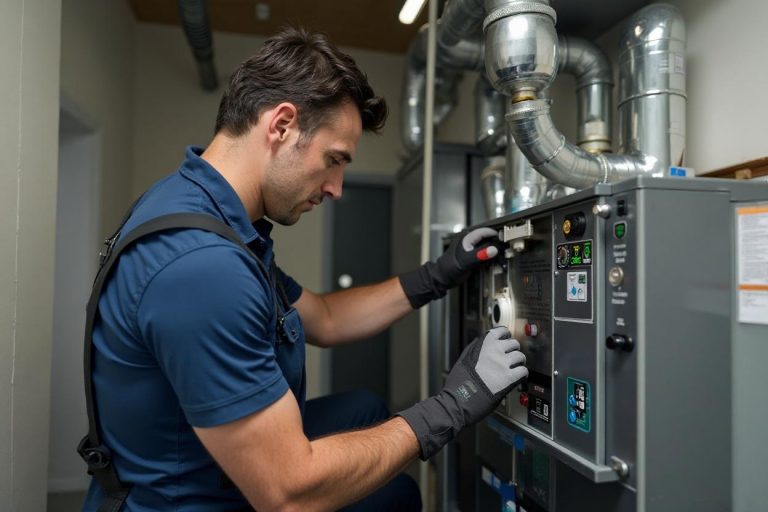
Common winter symptoms and what they mean
Homeowners in Middlefield often notice a pattern as winter settles:
- Short cycling that worsens when the temperature drops, often tied to a clogged air filter, failing draft inducer motor, or a limit switch tripping from restricted airflow. A yellow or unsteady pilot light and clicking sounds during startup, which may point to a dirty burner assembly, a dirty flame sensor, or a gas valve problem.
Either symptom deserves a prompt visit because repeated lockouts stress the ignitor and can leave the home without heat overnight. The team inspects the flame sensor for oxidation, cleans or replaces it as needed, and verifies microamp readings. If a pressure switch code appears, the technician checks the inducer motor, vent pipe slope, and termination for frost. For homes near Powder Ridge where winds are strong, a concentric vent kit with wind guard can solve recurring draft faults.
What cold does to key furnace components
The heat exchanger expands and contracts with every cycle. Longer burns during single-digit nights create larger thermal swings. Hairline fractures often reveal themselves during these conditions. A CO alarm that appears only on the coldest nights can indicate a crack that opens under heat. Technicians use inspection cameras and CO testing at registers to confirm. If a crack is present, replacement is the safe course.
Ignitors see more duty in severe weather because the furnace cycles more often at dawn and dusk. Silicon carbide ignitors can weaken and split after a few seasons. Upgrading to a compatible silicon nitride ignitor improves durability. A dirty flame sensor causes nuisance lockouts that look like ignitor failure; cleaning the sensor usually restores reliable ignition.
Blower motors, especially older PSC motors, overheat when pushing against clogged filters or undersized returns. In cold weather, that stress accumulates. Converting to an ECM blower in a replacement furnace reduces energy use and keeps airflow steady across a range of static pressures found in older duct systems around Jackson Hill and Baileyville.
Limit switches and rollout switches do their job more often in winter. Frequent trips signal a root cause that needs correction. A recurring limit trip under deep cold can stem from a cracked heat exchanger warping airflow, a blocked coil downstream, or a filthy filter rack.
The role of thermostat strategy in sub-freezing weather
Smart thermostats help, but deep setbacks during Arctic fronts can backfire. Dropping the home to 58°F during the workday may save gas under mild conditions, yet it can force the furnace into long, high-fire recovery cycles after sundown. That pattern magnifies short cycling and stress on the draft inducer motor. A smaller setback of 2 to 4 degrees works better during cold snaps. For two-stage and modulating furnaces, hold temperatures steady to let the equipment run on lower stages for longer, smoother cycles.
Anecdote from a Lake Beseck ranch: switching from an 8-degree setback to a 3-degree setback cut evening run time by roughly 25 minutes and stopped the furnace from hitting the high-limit switch during recovery. Gas use remained comparable over a week, but comfort improved and the equipment ran quieter.
Local conditions that matter in Middlefield
Middlefield sits in a valley with open fields and wooded slopes. Wind gusts over ridgelines near Powder Ridge can interact with sidewall vents. Homes near the Coginchaug River see more morning frost and can develop light icing on PVC terminations. Historic Rockfall homes often have limited return air pathways and rely on single-stage furnaces that run hot and short-cycle in extreme cold. Modern renovations around Lake Beseck with tight envelopes favor high-efficiency condensing furnaces with modulating burners and proper humidification to keep comfort steady without overshooting.
Direct Home Services knows these patterns. The team stages parts locally and runs 24/7 emergency dispatch so a homeowner in 06455 or 06481 can get heat restored even during a blizzard. Being based near Lyman Orchards cuts travel time, which matters during a no-heat call at 2 a.m.
What a professional winter tune-up actually prevents
A well-timed annual tune-up in September or October builds a margin for January. During cold snaps, that margin is what prevents a midnight failure. The Direct Home Services process includes combustion analysis, verification of gas pressures, and a 21-point safety inspection. The technician checks and documents:
- Heat exchanger integrity with visual inspection and CO testing at the supply plenum and registers. Draft inducer motor performance, pressure switch operation, and vent system slope and termination condition.
Those steps catch early signs of a cracked heat exchanger, clogged condensate traps, or a weakening inducer. Technicians clean the burner assembly and flame sensor, verify ignition timing, test the limit switch and rollout switches, and measure temperature rise across the heat exchanger to confirm airflow is within the nameplate range. The air filter is checked for size and MERV rating. A MERV 11 or 13 media filter is recommended when the ductwork can support the added resistance.
Choosing the right system for New England cold
For many Middlefield homes, a high-efficiency condensing gas furnace with a two-stage or modulating burner is the most reliable path through long winters. Two-stage units run at low fire most of the time, saving gas and smoothing out temperatures. Modulating furnaces adjust in small increments, which keeps rooms over garages and far branches more stable. In hybrid setups, a heat pump handles fall and spring, and a gas furnace carries the load during deep cold.
Direct Home Services installs and services major brands familiar to local homeowners: affordable gas furnace services Goodman, Bryant, York, and Rheem are common across Middlesex County. The team is a Carrier authorized specialist and offers the Infinity series for high-end efficiency, along with Trane, Lennox, American Standard, and Mitsubishi for dual fuel options. Energy Star rated systems come standard in proposals, and financing is available for replacements.
Real issues solved during Middlefield cold snaps
Several patterns emerge in service calls during single-digit stretches:
- Furnaces near the Durham line with sidewall vents show intermittent pressure switch faults after high winds. Solution: clean vent terminations, adjust slope, add wind guard, and verify inducer draft. Rockfall capes with original ductwork show short cycling and metallic banging on startup. That banging often points to duct expansion noise and sometimes a failing draft inducer bearing. Solution: replace inducer motor, add start-up airflow ramping via ECM blower if compatible, and snug duct connections. Homes around Jackson Hill with propane furnaces lose flame under heavy demand when tank levels drop. Solution: schedule timely propane deliveries, check regulator performance, and confirm manifold pressure. Lake Beseck renovations with tightly sealed envelopes face dry air complaints rather than lack of heat. Solution: add whole-home humidification, set thermostat to smaller setbacks, and confirm return paths under doors.
Each repair follows building science as much as mechanics. Many comfort problems trace back to airflow and duct configuration. The right furnace helps, but the best result comes from balancing the system.
Safety risks that rise in freezing weather
Cold weather increases carbon monoxide risk because vent and combustion issues appear under strain. A cracked heat exchanger may leak only when hot. A blocked vent traps exhaust and trips safeties, but in rare cases failing safeties can leave a dangerous condition. Every Middlefield home with gas heat should have a CO detector on each level and near sleeping areas. The furnace should show a clean blue flame, not yellow tipping. Any soot, metallic odor, headaches, or repeated rollout switch trips demand immediate service.
Direct Home Services technicians hold CT S-1 licenses and NATE certifications. They test for CO during repairs and confirm that the venting and combustion air meet code. If a cracked heat exchanger is suspected, they document findings and offer replacement options rather than patch fixes.
How to reduce cold-weather failures
A few habits protect equipment during the harshest weeks:
- Replace or clean filters before the first deep freeze and check monthly. Keep the area around the furnace clear so return air is unrestricted. Verify the outdoor vent and intake are free of leaves, nests, and snow. After an ice storm, check for frost at the termination. Set smaller thermostat setbacks during Arctic fronts. Keep propane tanks above 30% and sheltered from direct wind where possible.
These steps cut emergency calls. They also make tune-ups more productive because the technician can measure steady-state performance, not chase preventable lockouts.
Service coverage across Middlefield and nearby towns
Direct Home Services provides gas furnace repair, emergency heating service, annual tune-ups, and new installations across Middlefield and Rockfall in the 06455 and 06481 zip codes. The team answers calls from Reeds Gap to Baileyville, supports homes near the Levi E. Coe Library, and reaches Middletown, Durham, Meriden, Wallingford, and Higganum for regional repairs. Being close to Powder Ridge and Lyman Orchards means faster response in winter storms.
The company maintains and installs natural gas furnaces, propane furnaces, high-efficiency condensing models, single-stage units for budget projects, and two-stage and modulating furnaces for high comfort. Technicians carry parts for common failures such as ignitor malfunction, dirty flame sensor, limit switch trips, and blower motor failure. If the heat exchanger is cracked, they explain replacement options and provide a clear estimate.
What homeowners receive with Direct Home Services
Clear pricing, code-compliant work, and parts on the truck matter when it is 10°F outside. The team is licensed and insured, BBB accredited, and supports Energy Star rated systems. The first frost is a good cue to schedule a $99 Seasonal Furnace Safety Inspection. That visit includes the heat exchanger inspection, burner cleaning, a check of the draft inducer motor, verification of gas pressure, temperature rise measurement, and thermostat calibration. The goal is simple: keep the furnace running safely through January and February without surprises.
For installations, the company sizes equipment using load calculations, not guesswork. Duct static pressure is measured, and recommendations are provided if return capacity or venting needs improvement. Homeowners can request a free estimate on an Energy Star certified gas furnace. Flexible financing is available for Middlefield projects, and the team stands behind repairs with a parts and labor warranty.
Middlefield heating FAQ
How cold weather changes operation: Prolonged cold forces longer run times. That stresses the draft inducer motor, ignitor, and blower. If the filter is clogged or the ductwork is restrictive, the limit switch trips and the furnace short cycles.
What to check if the furnace clicks but won’t light: Look for a dirty flame sensor or weak ignitor. If the pilot flame looks yellow, turn the system off and call for service. That can indicate a combustion problem or gas valve issue.
What to do after a snow or ice event: Clear snow from the vent and intake. Check for frost rings on PVC terminations. If you hear a metallic banging or the unit starts then stops repeatedly, call the emergency line.
Is a high-efficiency furnace worth it in Middlefield: Yes, especially in homes with long heating seasons. A 95% to 98% AFUE unit paired with a modulating burner stabilizes temperatures and cuts gas use. Proper vent design and condensate protection are key to winter reliability.
Why choose a Carrier, Trane, or Lennox system: These brands offer proven modulating and two-stage platforms with ECM blowers and strong parts availability in Connecticut. Direct Home Services installs Carrier Infinity systems and maintains Rheem, Bryant, Goodman, York, and American Standard models as well.
What licenses matter: Look for CT S-1 licensed contractors with NATE certified technicians. That combination confirms training in combustion safety, code requirements, and diagnostics for modern forced air heating.
What about uneven rooms over garages: Consider adding a return, sealing ducts, and moving to a two-stage or modulating furnace. Balance the system first, then adjust equipment settings. Space heaters mask the problem but add risk.
How to spot a cracked heat exchanger: Symptoms include soot, CO alarms during long cycles, strange odors, and rolling flames. A camera inspection and CO testing confirm the issue. If cracked, replacement is the safe solution.
Schedule service in Middlefield, CT
Cold exposes the weak link in any heating system. If the furnace is short cycling, showing a yellow pilot light, or struggling with uneven heating, it is time to bring in a professional. Direct Home Services provides gas furnace services across Middlefield, including 24/7 emergency dispatch during Connecticut blizzards. Call to schedule repair, book a $99 Seasonal Furnace Safety Inspection, or request a free estimate on a new Energy Star certified system. The team serves Lake Beseck, Jackson Hill, Reeds Gap, and the entire 06455 and 06481 area with the right parts, the right brands, and code-compliant work that stands up to New England winter.
Direct Home Services provides HVAC repair, replacement, and installation in Durham, CT. Our team serves homeowners across Hartford, Tolland, New Haven, and Middlesex counties with energy-efficient heating and cooling systems. We focus on reliable furnace service, air conditioning upgrades, and full HVAC replacements that improve comfort and lower energy use. As local specialists, we deliver dependable results and clear communication on every project. If you are searching for HVAC services near me in Durham or surrounding Connecticut towns, Direct Home Services is ready to help.
Direct Home Services
57 Ozick Dr Suite I
Durham,
CT
06422,
US
Phone: (860) 339-6001
Website: https://directhomecanhelp.com/
Social Media: Facebook | Instagram
Map: Google Maps